Today marks World Hepatitis Day 2022, a day to promote awareness of all things Hepatitis. Hepatitis is a blood-borne virus that can cause potentially fatal damage to the liver if left untreated. People who use drugs, especially those who inject, are in a high-risk group for suffering from Hepatitis. We are passionate about providing services to help prevent infection, make getting tested easy, and provide treatment for the people we work with. Jess Oke our Blood-borne Virus Nurse and has been working tirelessly to support people in Bristol with all aspects of Hepatitis. We caught up with Jess to see what she, and the team, have been up to and what’s in store for the future.
It’s been a big year for you, Jess; what have been some of the highlights?
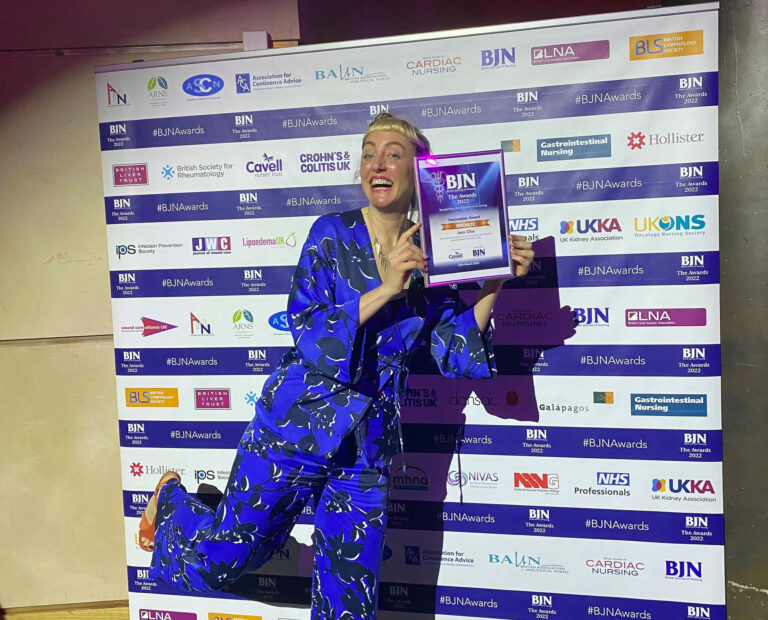
It’s been a very busy year in the world of Hep C in Bristol! All local service providers have come together to collaborate in our mission to reach elimination and we have made great headway. Some highlights for me include representing Bristol at a Parliamentary Reception on Hep C hosted at the House of Commons to raise awareness with MPs. Sadly no MPs from Bristol managed to attend, but it was fantastic to be part of such a unique experience. Myself and Jason from The Hep C Trust were lucky enough to be given awards for our work, I won the bronze award for Innovation at the British Journal of Nursing Awards and Jason won the Hep C U Later peer award! Working alongside people with lived experience who give up their time for free to lift up others is one of the best things about my job. That and telling people they no longer have Hep C at the end of treatment.
Jess at the British Journal of Nursing Awards
How have you been supporting people around blood-borne viruses?
A regular week for me means finding and treating people using our community treatment pathway. The majority of people living with Hep C can now be treated without attending hospital-based clinics, which is a major step forward. We have a Hep C clinic at BDP on Mondays from 2 till 4.30, with free transport provided by The Hep C Trust for people who need it. Tuesday is outreach day; myself and Hep C Trust peer Jason go out to see people who are unable to come to Bristol Royal Infirmary or BDP. These home visits are and continue to be a powerful tool to engage people with complex needs who often have been living with Hep C for many years and need intense support to access treatment.
How has the service been evolving over the past year?
We have just appointed a brand-new role at BDP; Georgia Woodcock will be the new Assertive Engagement Hep C Outreach Worker. Her role will involve finding and engaging some of our most vulnerable service users living with HCV. This role a collaborative new project between Hep C U Later and University Hospitals Bristol Hepatology department, and we’re all excited about what Georgia will bring to the team.
The last year has seen our collaborative professional networks strengthen; the Hepatology team at the BRI works tirelessly to ensure our service users are treated in the community as well as hospitals, The Hep C Trust provide vital peer support, patient transport and medication deliveries and Hep C U Later have been a great support to BDP, with Louise Hansford most recently assisting us in getting our data on track so we can evidence our progress.
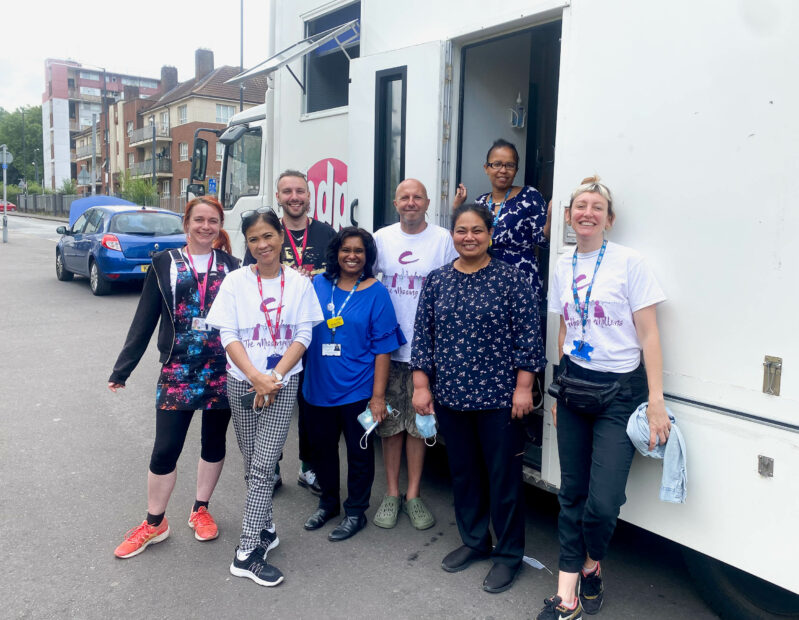
Testing event at Logos House, Bristol
What’s in store for the coming year?
Myself and BDP/ ROADS will be working hard to reach Hep C elimination status in the drug and alcohol sector by the end of 2023. I work with some very skilled and inspiring people from across the sector and I’m looking forward to seeing new staff grow into their roles and make their mark. I will continue to support our people with the most complex needs to get on treatment, so they don’t get left behind.
Thanks for the chat Jess; we can’t wait to see what the next year holds!
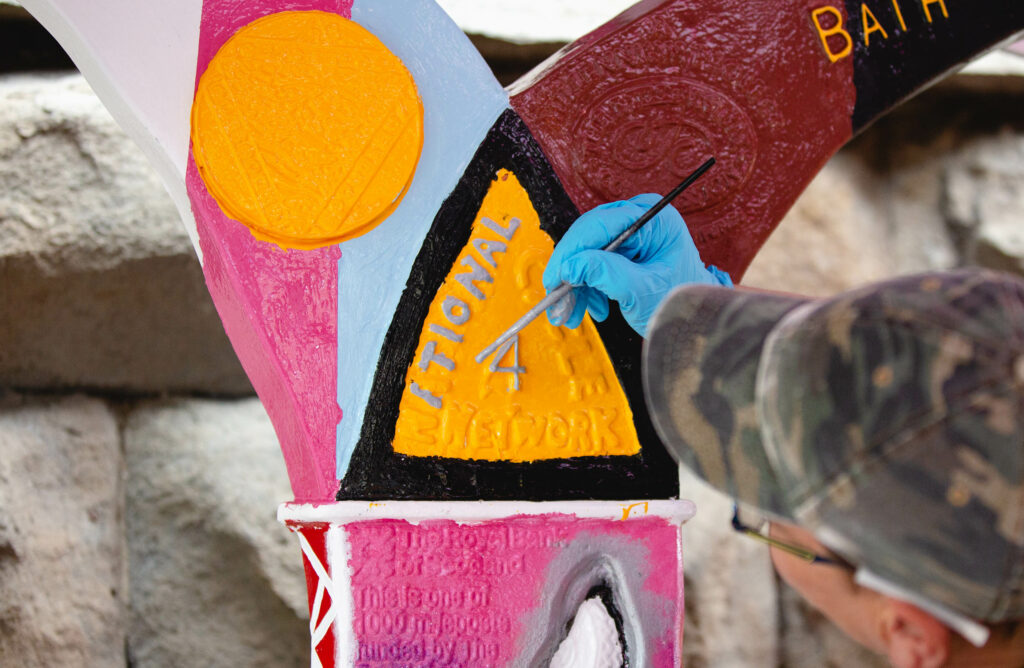
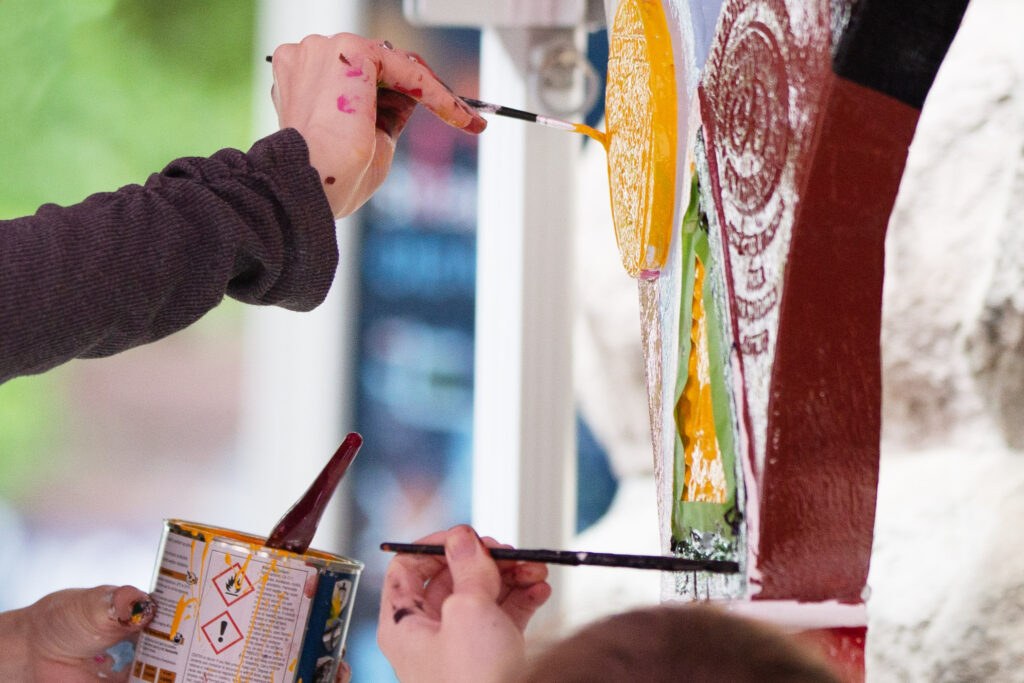
Our Prism – LGBT+ support group has had the honour of decorating one of SUSTRAN’s mile markers close to BDP headquarters. Members of the group came along armed with a plan and paintbrushes and set to work decorating the once bland mile marker. Over the course of the day they transformed the mile marker from rusty brown to a vibrant depiction of the pride flag to celebrate the annual event celebrating LGBT+ people. This year is the 50th anniversary of Pride so no better time to give the mile maker a revamp.
Where can I find the mile marker?
The mile marker is situated on Straight Street (some what ironically) on the corner of the large Gardiner Haskins department store in Old Market. Below is the Google maps link to the store; if you follow directions to there you definitely won’t miss it.
Who are Sustrans?
Sustrans are a charity that aims to make walking and cycling easier for everyone. They are the custodians of the National Cycle Network, the web of cycle path routes that run the length and breadth of the UK.
What is a Mile Marker?
The mile markers are cast iron sculptures that were installed to celebrate the turning of the Millenium. There are four different designs each designed by a different artist and over 1000 of these markers can be found dotted up and down the UK.
What is Prism?
Prism is our LGBT+ specific support service. We believe that accessible and appropriate services should be available to all members of our society and we understand that different groups need different services. We set up Prism in 2016 to respond to the barriers we identified that members of the LGBT+ were experiencing when trying to access support.
Prism offer one-to-one support, a weekly group session along with ad-hoc advice and support to anyone who needs it.
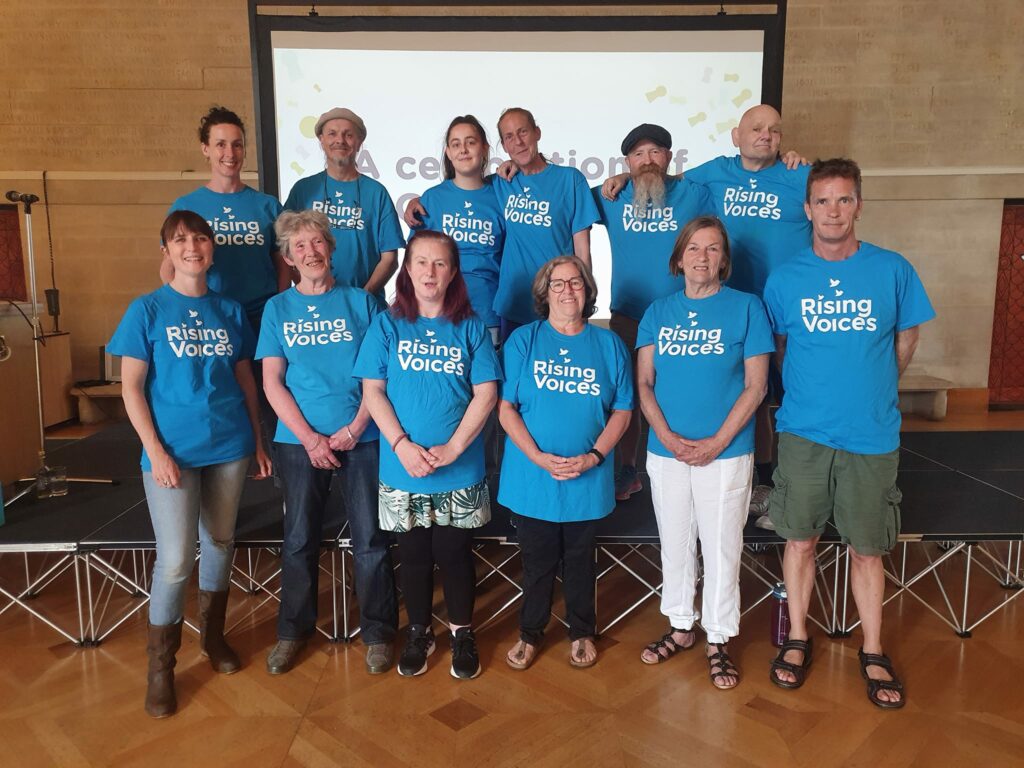
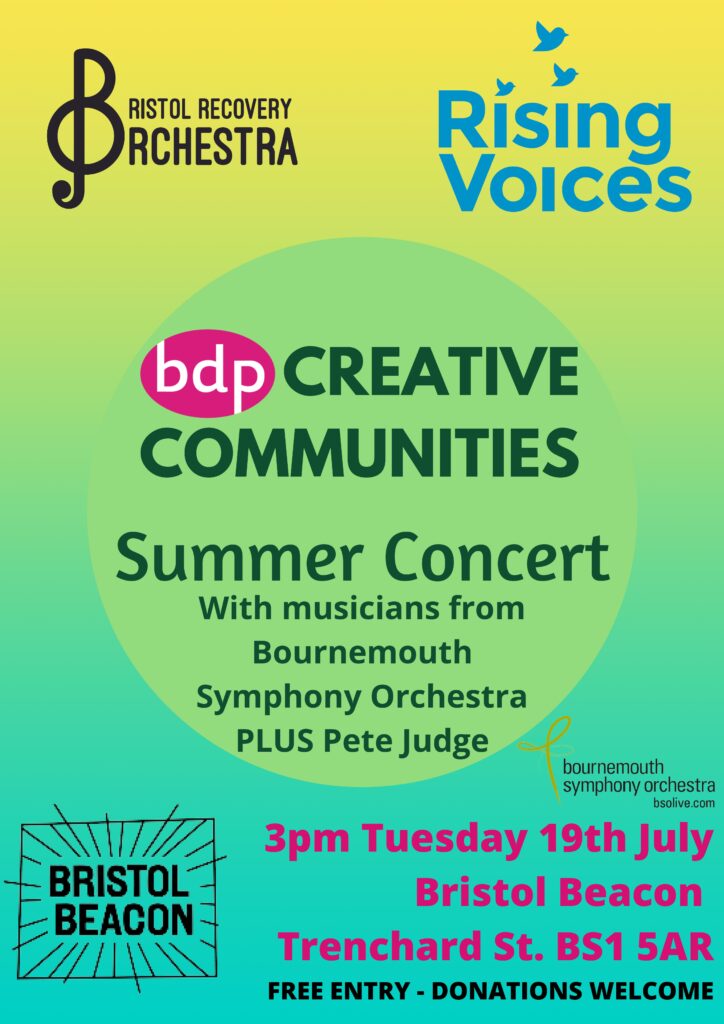
Chris Shilvock & Hannah Baker of Rising Voices, BDP’s recovery choir, were interviewed on the Saturday Edition show on BCfm this past Saturday (2nd July). Chris is a trainee at BDP and Hannah is a volunteer who helps out with our Creative Communities support groups. The pair chat at length with host, Billy Quain about the choir, their backgrounds and motivations for getting involved in the choir, BDP and the work we do, and where to catch upcoming Rising Voices performances. It’s a great interview and we would like to thank Billy and the BCfm team for having us on.
You can listen back to the interview on BCfm’s website here – https://www.bcfmradio.com/listen-again You will need to then search for ‘Saturday edition’ and select the show from 2nd July 2022. The segment starts at 1hr 8minutes.
Today marks the 35th anniversary of BDP’s Needle & Syringe Program. Back in 1987, HIV cases in the UK and around the world were rising. Everyone was searching for new ways to keep people safe and reduce the harm caused by the virus.
What is a Needle & Syringe Program?
Needle & Syringe Programs (NSPs) provide sterile injecting equipment to people who inject drugs. Using sterile injecting equipment drastically lowers the chance of contracting a blood-borne virus such as HIV or Hepatitis C. Needle & Syringe Programs were originally known as Needle Exchanges as early iterations around the world required users to hand in their used equipment in order to be given new clean equipment.
When were they first introduced?
The first Needle & Syringe Programs were introduced in 1987 in 25 locations around the UK. These first locations, including ours at BDP, were part of a pilot commissioned by the then Department for Health and Social Security into the effectiveness of NSPs in reducing rates of HIV in people who inject drugs. Since then, the number of NSP locations has increased markedly. NSPs were shown to have positive health outcomes, and along with little public or political backlash, means sterile injecting equipment is now available for free up and down the country.
Why are NSPs important?
Providing people who inject drugs with clean injecting equipment reduces the potential harms faced by this population in a number of important ways:
Reduces the risk of transmission of blood-borne viruses
Viruses such as HIV and Hep C are transmitted through the sharing of injecting equipment as blood containing a blood-borne virus can be introduced into a healthy person’s bloodstream.
Using used injecting equipment increases the chance of injecting injuries
Reusing injecting equipment increases the chances of injecting injuries such as infections, abscesses and other wounds. Needles get blunt even after one use, and anytime spent outside of the sealed and sterile packaging increases the chance of infection.
Providing free injecting equipment increases engagement with drug services
Individuals accessing sterile injecting equipment have to engage with health care professionals. This means that drug workers have an opportunity to engage with people who inject drugs even if they have no intention of making any changes to their use. These brief interactions can be invaluable as workers can talk to individuals about their injecting practices, discuss safer techniques and lower the barriers for people to engage with services in a more structured manner.
We are incredibly proud of being part of the pioneering history of Needle Syringe Provision in the UK. Over the years, there have been a few significant steps forward in our ability to reduce harm that come from new technology or changes in legislation that allow something previously prohibited to be rolled out. NSPs are one of these advancements and are an essential service for us to reduce harm and as a tool to engage with existing and new service users.
Professor Gerry Stimson’s team pioneered research in this area which helped NSPs develop as core elements of the UK’s drug services: you can find one of their many publications here.
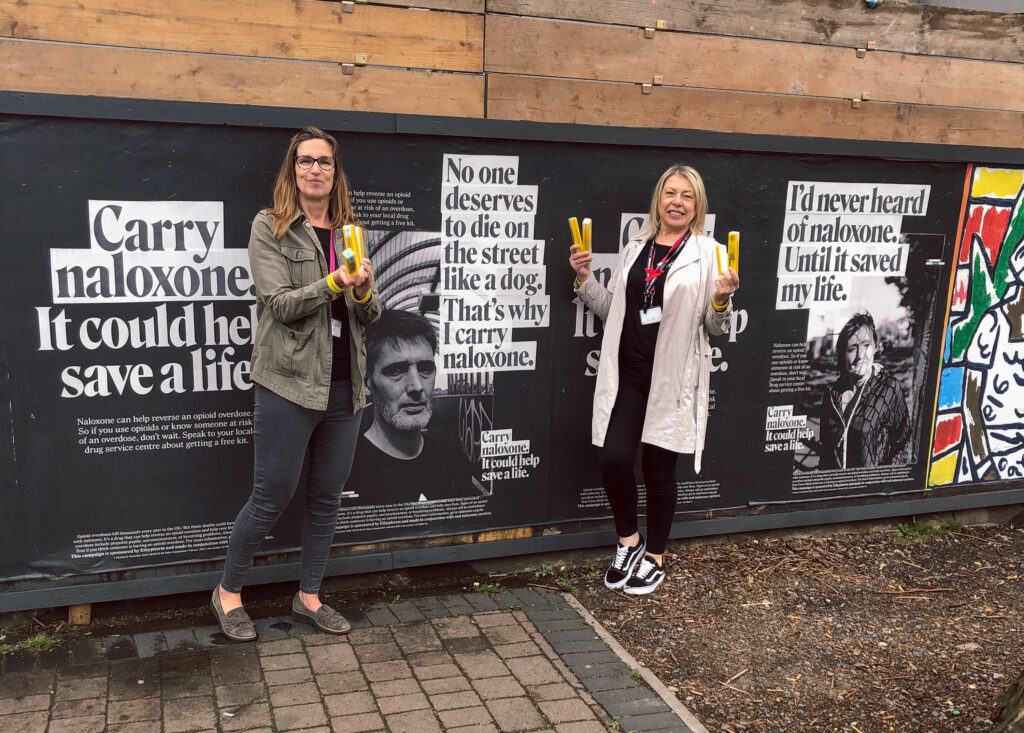
The Advisory Council on the Misuse of Drugs(ACMD) has published a self-commissioned review of the evidence on the provision and availability of naloxone in the UK. Naloxone is a medicine that can temporarily reverse the effects of opioids and is used as an emergency treatment for people suspected to be experiencing an opioid overdose. The review looks at the provision and availability of naloxone and has made a number of recommendations to optimise the use of naloxone to reduce drug-related harms.
BDP supply the majority of naloxone in the Bristol area and because of this we were asked to contribute to the report. We submitted information on the prevalence and provision of naloxone, how many people were carrying it, how many people are using it and a series of recommendations from our own experiences that would improve naloxone provision in the UK. This information was comprised of statistics from our records, along with input, opinions and case studies from BDP service users, people who have received naloxone training from BDP and our staff.
We welcome the recommendations put forward by the ACMD after gathering this wealth of evidence which include:
Improving the quality of the data of take-home naloxone across the UK
Using evidence to increase naloxone carriage
Greater provision to those leaving prison
Increase carriage within emergency service staff
Allowing all community pharmacies to provide naloxone as some are currently unable to do so
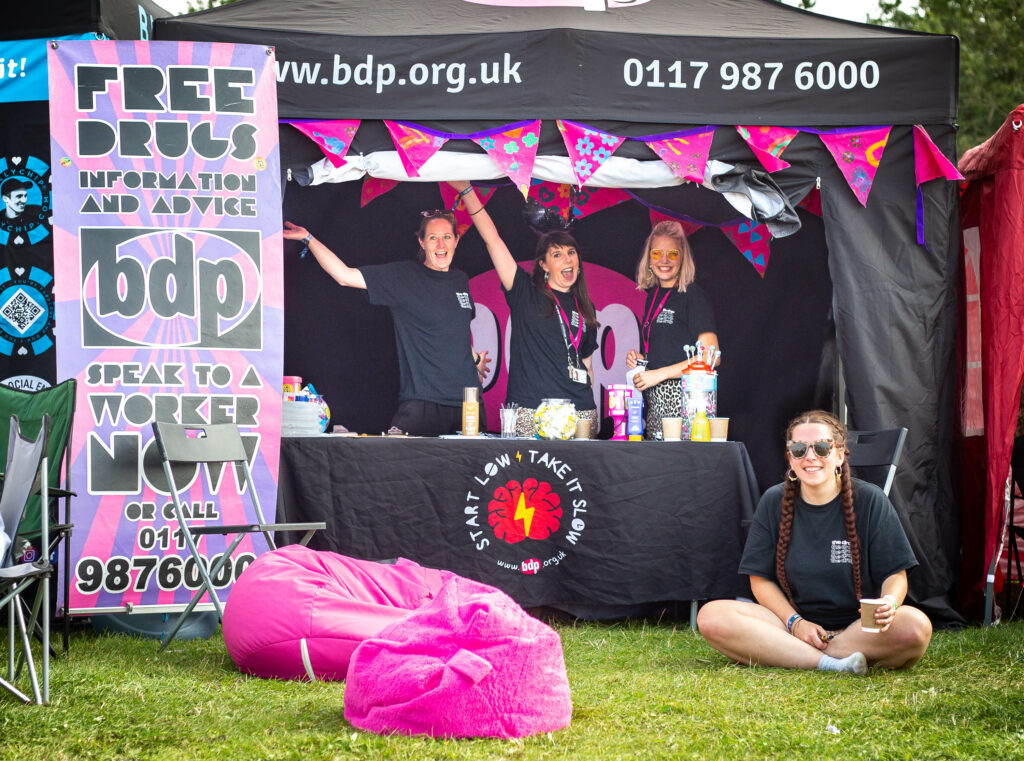
This festival season is set to be our busiest yet and we can’t wait!
After the dreaded c-word cancelled all events in 2020 and the 2021 season got off to a late start, this year we finally get to enjoy a full programme of events – let’s dance likes its 2019!
Whether you’re a seasoned veteran of the festival circuit or a fresh-faced newbie, we’ll be around to support you and your mates to stay safe if you choose to use alcohol or other drugs. Stop by if you’ve got any questions about drugs, to test your knowledge or take a minute to chill out if you are feeling worse for wear. Of course, we’ll be providing all our usual freebies including condoms, lube, lollies, clean snorting equipment and stickers!
Below is a list of events where you’ll be able to find us over the next few months. Grab your tickets now before they sell out!: