23.10.26
11 minute read
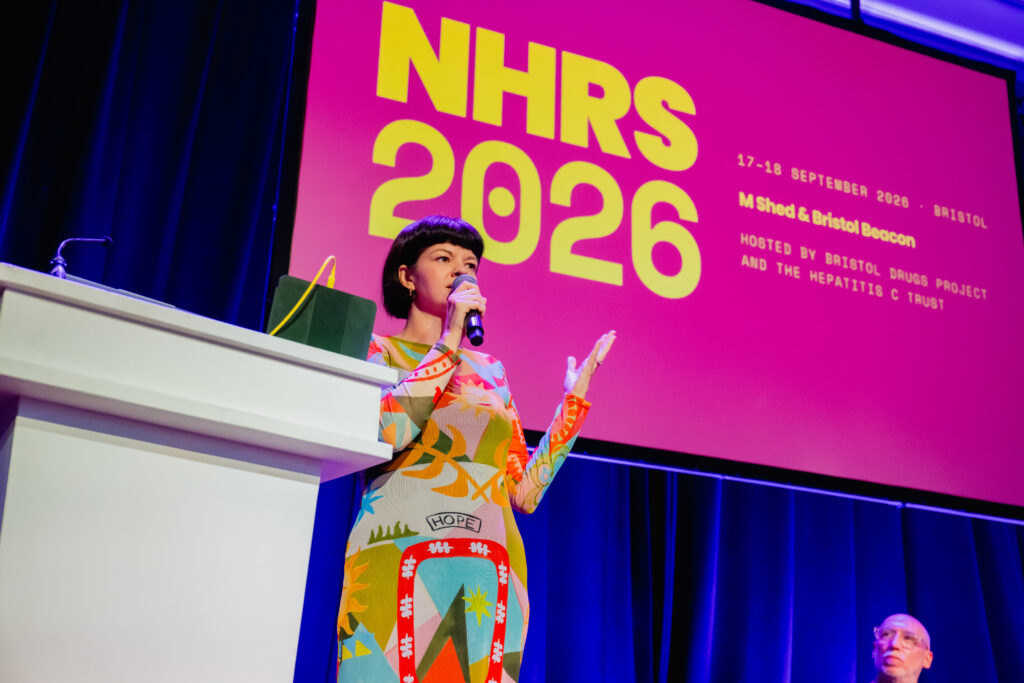
That’s a wrap on our National Harm Reduction Summit in partnership with The Hepatitis C Trust!
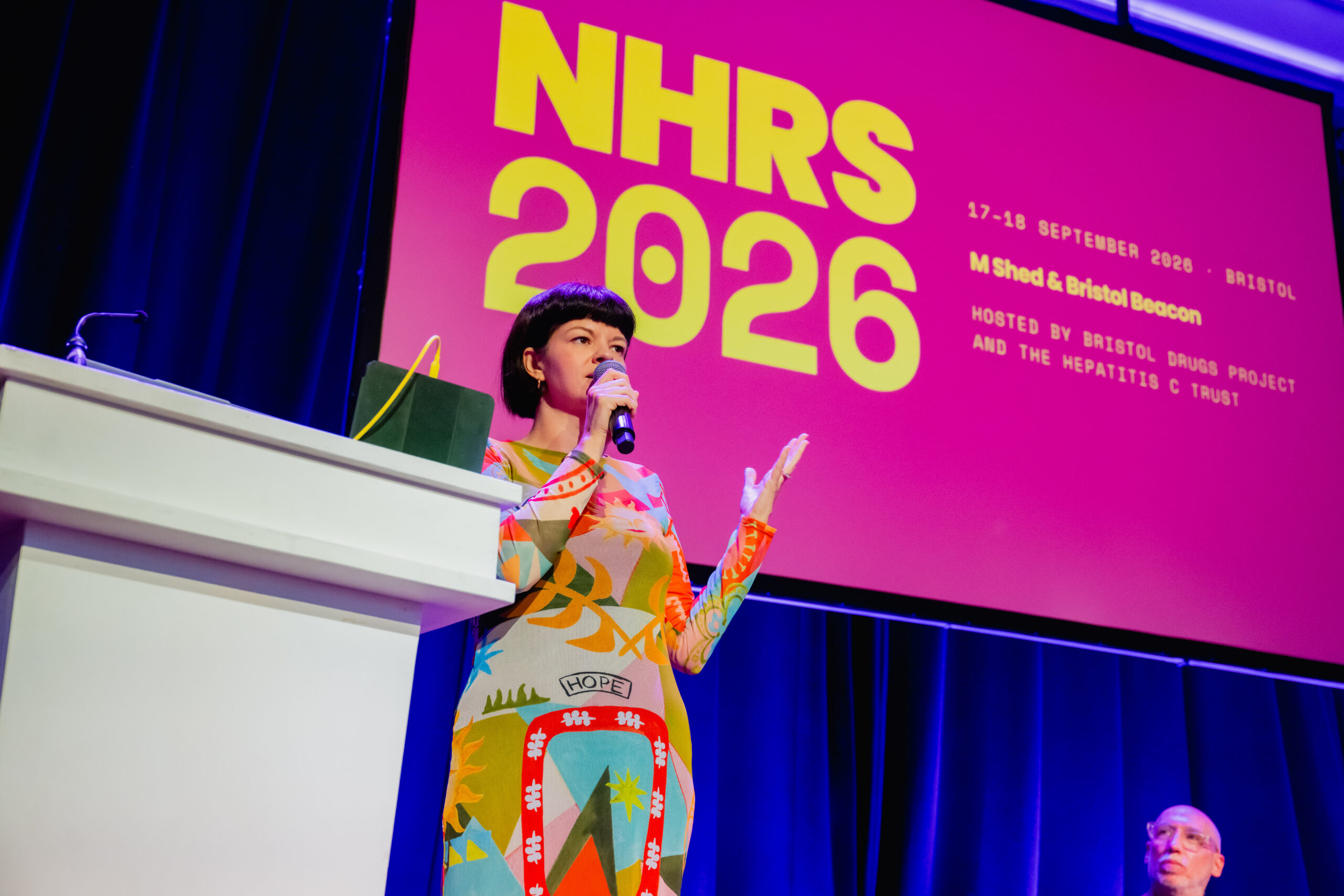
Across two inspiring days, the National Harm Reduction Summit (NHRS) served to shed a light on what’s currently happening in the world of harm reduction, and sought to look into the future to see where we can go next.
Since our humble beginnings in 1986, BDP has always lead with Harm Reduction. From opening one of the first Needle & Syringe Programs in the UK, to hosting our Women’s Morning every Wednesday for over 30 years, Harm Reduction is at the forefront of what we do.
In honour of our roots, our ethos and our philosophy, the NHRS felt like the perfect way to celebrate 40 years of BDP, and pave the way for what what we, and other Harm Reduction organisations, communities and individuals can do next.
We heard from over 30 speakers over two days, with a focus on championing Harm Reduction, and diving into what changes we can all make collectively to ensure Harm Reduction doesn’t slip through the cracks of ever-evolving services.
We tried to ask the big questions: Are services doing enough? Does a rise in austerity mean Harm Reduction is falling to the wayside? How can we make sure that Harm Reduction isn’t just integrated into services, but stands proudly at the forefront? How can we learn from the people that we support? From grassroots, community-led, peer-delivered Harm Reductionists? From not just people who use drugs as a whole, but from the intersection of people who use drugs, and people who form the roots of Harm Reduction – Queer People, Sex Workers, Women, People of Colour and more. How do we ensure that we’re not just listening to people, but building something with them?
That’s where our inspiring speakers come in. From Bristol to Quebec, our line up of speakers house a multitude of skills, experience and ideas, all forming together to build a network of shared understanding that we can take home and implement into the work we do.
We kicked off Day 1 at the M-Shed, with Exchange Supplies’ Deb Hussey, former BDP volunteer and employee, and forever passionate Harm Reductionist. Deb set the scene with her talk ‘Against the Grain: The impact of Bristol’s Harm Reduction Ethos’, where she shared her journey into the world of Harm Reduction, and how ‘back in the day’ Bristol helped build the foundation for the Harm Reduction approaches we see around the country today.
Following on from Deb, we saw Catherine Cook from Harm Reduction International, Monica Desai and Amelia Andrews from UKHSA and Cara Lavan from The Green Party/Anyone’s Child. This jam-packed morning session set the tone for the day; what does Harm Reduction look like – in policy, in practice and in progress?
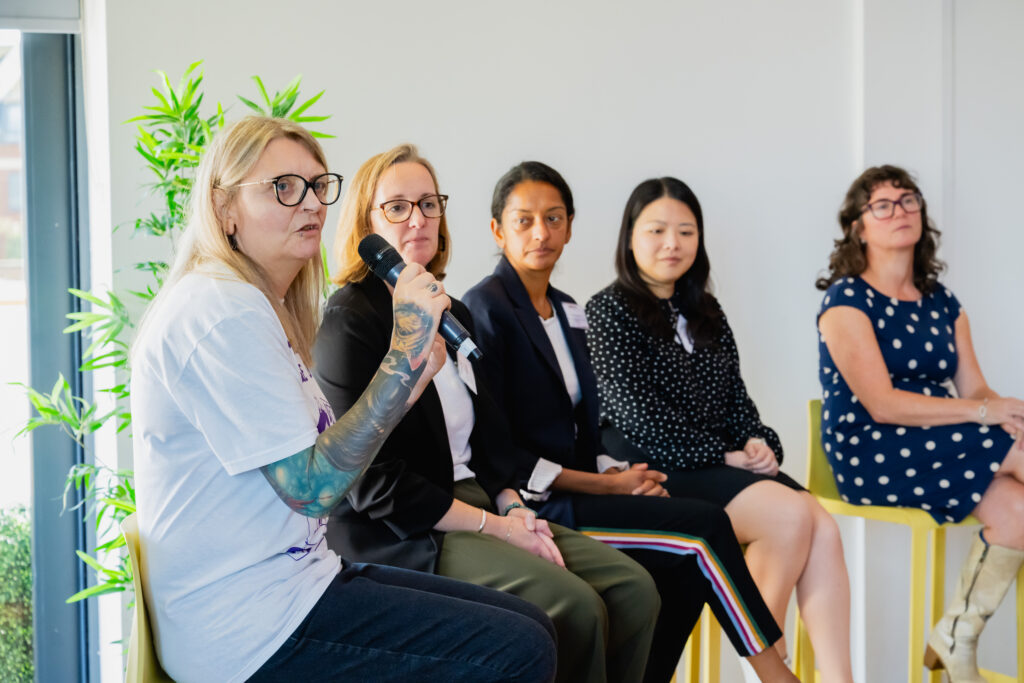
After a short break we continued our exploration into the current state of Harm Reduction with a session on Needle & Syringe Provision (NSP).
The NSP session focused largely on creative initiatives and work-arounds to increase community access to sterile injecting equipment. We heard from the likes of Harm Reduction legend Phillipe Bonnet (Hep C Trust) with his talk on the ‘Birmingham Harm Reduction Van’ and Glasgow’s John Campbell with ‘The Success of the Incentivised WAND Initiative’; an incredible scheme that over the last few years has seen a huge saw in Scotland’s access to NSP.
This session introduced a running theme from the NHRS; how can we take what we have already and make it better?
That brought us nicely onto session number three: What Works.
Hosted by Dr Jenny Scott, this session focused on Overdose Prevention Centres (OPC). We heard from Chelsea Shover-Darling (UCLA), sharing Service User and BDP staff perspectives on a hypothetical OPC in Bristol; an eye-opening talk, shining a light on the potential benefits an OPC could have for our city. Shortly followed Saket Priyadarshi from The Thistle – the UK’s first sanctioned Drug Consumption Facility. The opening of The Thistle in 2025 set a president for what this kind of initiative could look like across the UK. Maybe we should be taking a leaf out of Scotland’s book…
Post-lunch we opened with Maggie’s Session, a dedicated slot on the agenda of the NHRS that we opened to pitches from across the community – no stage experience necessary, just a perspective worth hearing. The slot was awarded to Lizzie Mulholland from Karuna Collective, a Harm Reduction social media account that over the last 4 years, has cultivated an awareness of Harm Reduction in online spaces.
Following on from Lizzie’s insightful take on the role of social media in Harm Reduction conversations, we took to our LGBTQ+ session. Chaired by Shayla Schlossenberg (Release), this session had a primary focus of key learning we can take from the Queer community’s grassroots Harm Reduction. We saw BDP’s own Lukas Sykes and Jack Wilkinson talk about Project4T, our Health and Harm Reduction Hub for Trans+ people. Seba from Safe Only CIC enlightened the audience about the importance of ensuring Queer voices are not ignored in Harm Reduction spaces. And Clyne Hamilton (Queen Mary University of London) shone a light on ‘Rethinking Harm Reduction in Chemsex’.
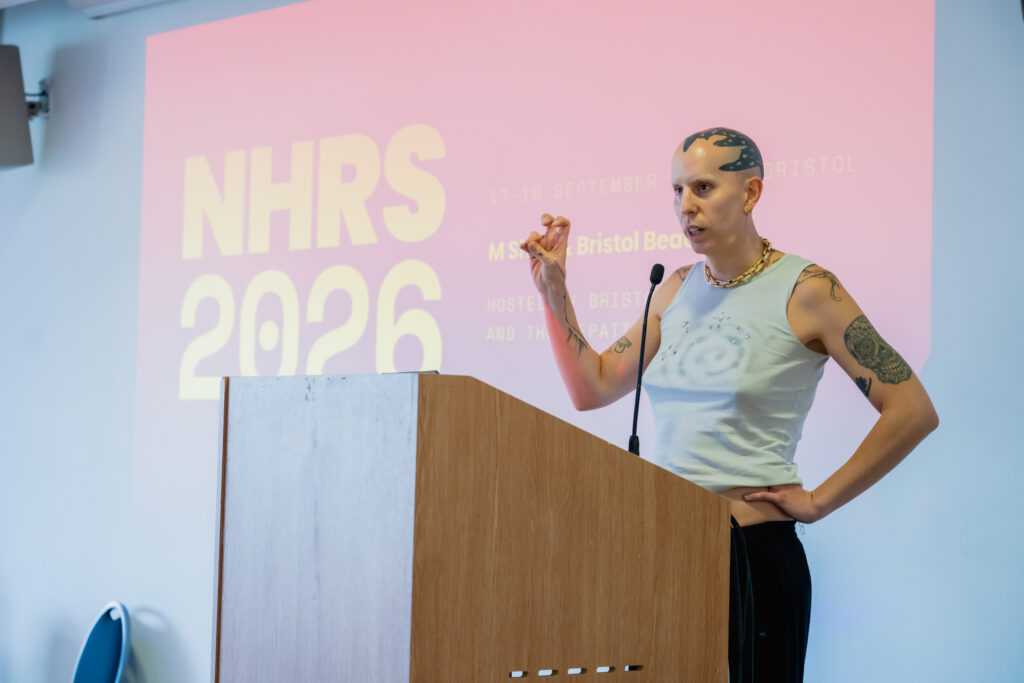
This session was a true eye-opener to the power and resilience of the LGBTQ+ community’s Harm Reduction practices.
What better way to end Day 1 than with four amazing talks all about stimulants. Our Stimulants and Policy session took a deep dive into the findings of the Safer Inhalation Pipe study (Magdalena Harris) – research that BDP played a key role in. We also looked at the distribution of stimulant use across the UK with Mark Roberts (Hep C Trust), what we can offer stimulant users as treatment with Mark Kelleher (Lambeth Addictions Consortium & SLaM) and the ins and outs of paraphernalia laws with Niamh Eastwood (Release).
What a line up!
But the fun didn’t stop there… We had an array of fringe events happening across the week. Thursday’s curtains were drawn to a close with an evening social at the Watershed, an opportunity for all of the attendees to reflect on what they had seen, heard and taken away from the sessions. Watershed also screened Thea Gajic’s Surviving Earth, a film featuring BDP that explores themes of substance use, family and grief.
Bring on Day 2 at Bristol Beacon!
The Welcome Session started strong with an exploration into The Role of Harm Reduction in Hepatitis C Elimination, lead by BDP Trustee, and Hep C U Later’s Louise Hansford. After talks about commissioning and funding, the scene was set for what became an apparent theme for Day 2; the current climate in drug and alcohol services.
Onto session two: Women.
It goes without saying that this session was fuelled by empowerment. From Julia Sheenan (The Hep C Trust) on ‘Improving Women’s Health Outcomes’, to Vicki Beere (University of Manchester) on ‘Women’s Access to Harm Reduction Services’, to Grace Sumner (Women’s Inclusion Health Collective) on sex workers’ representation in services, this session dismantled the status quo of Harm Reduction services, and illuminated the gaps that exist for women.
Signing off with a panel, a laser-focused audience were clued into what barriers women face accessing services, how sex workers are often missed from Harm Reduction conversations, and how we, as Harm Reductionists, can build services that not only respond to the intersectional needs of women, but are integral to ensuring all women have equitable access to Harm Reduction.
Day 2’s post-lunch session opened with Dean Acremen of WEDINOS, sharing insightful data from the drug checking service. Following that, Adam Holland (University of Bristol) spoke on stigma, evaluating its many complexities and showcasing the multitude of layers to the stigmatisation of people who use drugs.
We then took another look at ‘What Works’, this time with a focus on Opioid Substitution Therapy (OST), whereby both Gavin Jones (GDAS/Kaleidoscope) and Jenny Scott (University of Bristol) explored different ways to optimise OST in their respective talks.
Our next session was centred around Global Majority Communities and how we can ensure that services are culturally competent. Anne Campbell (Queen’s University Belfast) kicked off the session with the 2026 ACMD report on ‘Drug Use and Ethnic Minorities’, followed by Turning Point’s Dliesh Popat on ‘A Community Approach to Harm Reduction’. Both sessions transformed perspectives on how services can take a more holistic approach to reaching different communities, ensuring no community is left behind.
The NHRS came to a close with a session on Peer-Led Practice & The Future. We heard from a range of speakers with lived and living experience, with an emphasis on the outstanding benefits of peer-curated and delivered support. Rebecca Bulmber (The Hep C Trust) spoke on ‘The Power of Peer Research’, Mat Southwell (Coact) took a deep dive on the co-production of peer-led ketamine support. All the way from Quebec, Isabelle Boisvert (CRISM) discussed ‘Peer-Led Strategies in Care and Research’ and Cerys Tudor and AJ Erikson (Youth Rise) showed the importance of listening to and learning from Young People in Harm Reduction.
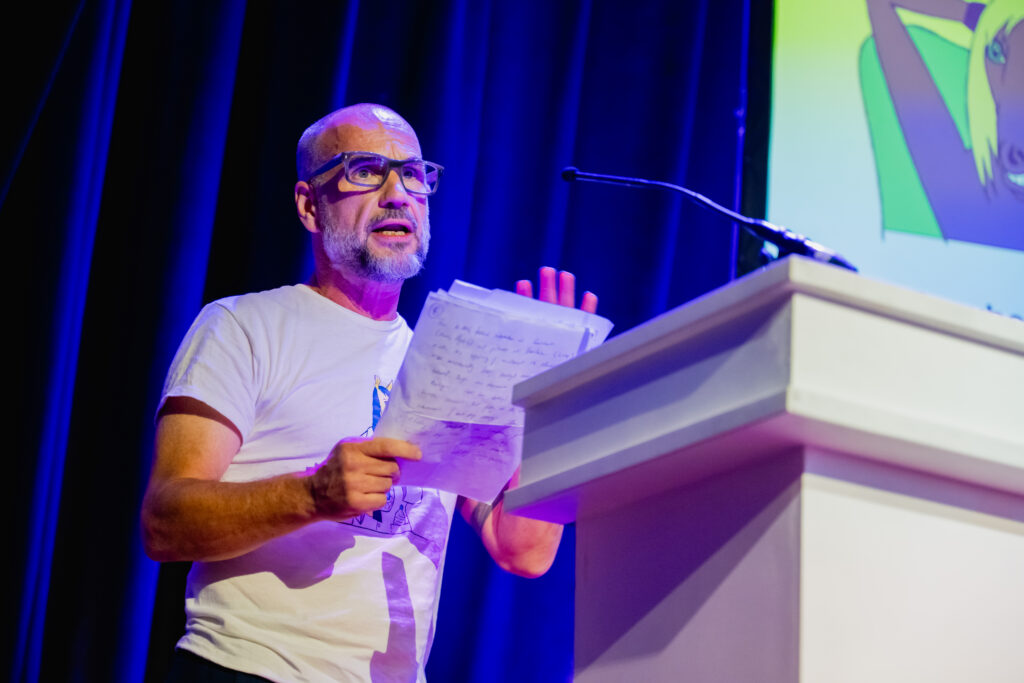
The last two sessions were a perfect way to close the National Harm Reduction Summit; how can make sure the support we deliver is actively informed by, developed by and led by the people and communities we support?
With some final words from BDP’s CEO Lydia Plant, we wrapped up our celebration of 40 years of BDP, Harm Reduction, innovation and looking to the future.
BDP has never wanted to shy away from going against the grain, so why stop now? Harm Reduction isn’t about playing it safe, it’s about adaptation; investing in the people we support, and being creative, dynamic and flexible in the way we develop that support.
It’s about including peers in conversations, women in conversations, Global Majorities in conversations, sex workers in conversations, Queer and trans people in conversations, and young people in conversations. It’s about not labelling communities as ‘hard to reach’ but ensuring our services are easy to access. It’s about looking at what works and building from that. It’s about being active, not passive, in the changes we need to make sure everyone has equitable, intentional and targeted support available to them.
Harm Reduction has paved the way for the services we offer, NHRS served to ensure these conversations don’t end, and that Harm Reduction isn’t lost, but that it continues to thrive both practice and in policy.
It was wonderful to work with The Hep C Trust, the NHRS felt like a great way to showcase the amazing work that’s going on in the Harm Reduction world, and build on this work to improve services around the country. There were so many incredible speakers and conversations that were both exciting and challenging. There was such a buzz across the two days; learning from the rich history of Harm Reduction and feeling inspired by the new generation of Harm Reductionists. – Lydia Plant, CEO
Hearing from over 30 incredible voices over the NHRS has inspired us to look inwards, dismantle, reconfigure and redevelop our services. We want Harm Reduction to be at the front and centre of what we do. We want to listen to the voices that go unheard and platform them in the development and delivery of our service. Harm Reduction will always be an ongoing conversation, and it’s a conversation we want to champion.
We’re extremely proud of the work we’ve done over the last 40 years, and want to continue to honour and grow from that. Our 5 year strategy outlines the ways in which we aim to do this. To find out more, head to: BDP Launches New 5 Year Strategy
We want to extend a huge thank you to our speakers, whose talks set the scene for an inspirational future of Harm Reduction. To our sponsors, and The Hepatitis C Trust, without whom, the conference wouldn’t have been possible. To all of the organisers, and to M-Shed and The Bristol Beacon for hosting across the two days. And of course, to our attendees, thank you for joining us in this adventure.
See you next time!
Photo Credits: Ania Shrimpton
23.10.26
11 minute read
Bristol Drug Project
That’s a wrap on our National Harm Reduction Summit in partnership with The Hepatitis C Trust! Across two inspiring days, ...